Whoa. Ever try to sign into an exchange at 2 a.m. and feel every security step like a tiny roadblock? Yep—I’ve been there. My instinct said this would be quick, but then the weird combo of 2FA prompts, ID scans, and “are you really you?” checks made me pause. Something felt off about how many places treat verification like a test rather than a service. I’m biased, but that part bugs me.
Here’s the thing. OKX (yeah, the one most traders use for margin and futures) has a verification flow that looks simple on the surface. But actually, wait—let me rephrase that: it’s simple if you know the order of steps and what to prepare. On one hand you want security tight; on the other hand traders want access fast—though actually the tradeoff isn’t always obvious until you’re stuck on screen, fidgeting with your phone camera.
First impressions matter. Seriously? The login page loads, you type email, password—then the second factor. If you don’t have your authenticator handy, that can be a showstopper. My gut told me to pre-check devices. Initially I thought I could rely on SMS only, but then realized SMS can be flaky and slower than an authenticator app. So plan for both: have your phone, backup codes, and a clear photo ID ready. Also, keep calm. Deep breaths—this will pass, and yes, traders have worse downtime watching candle charts.
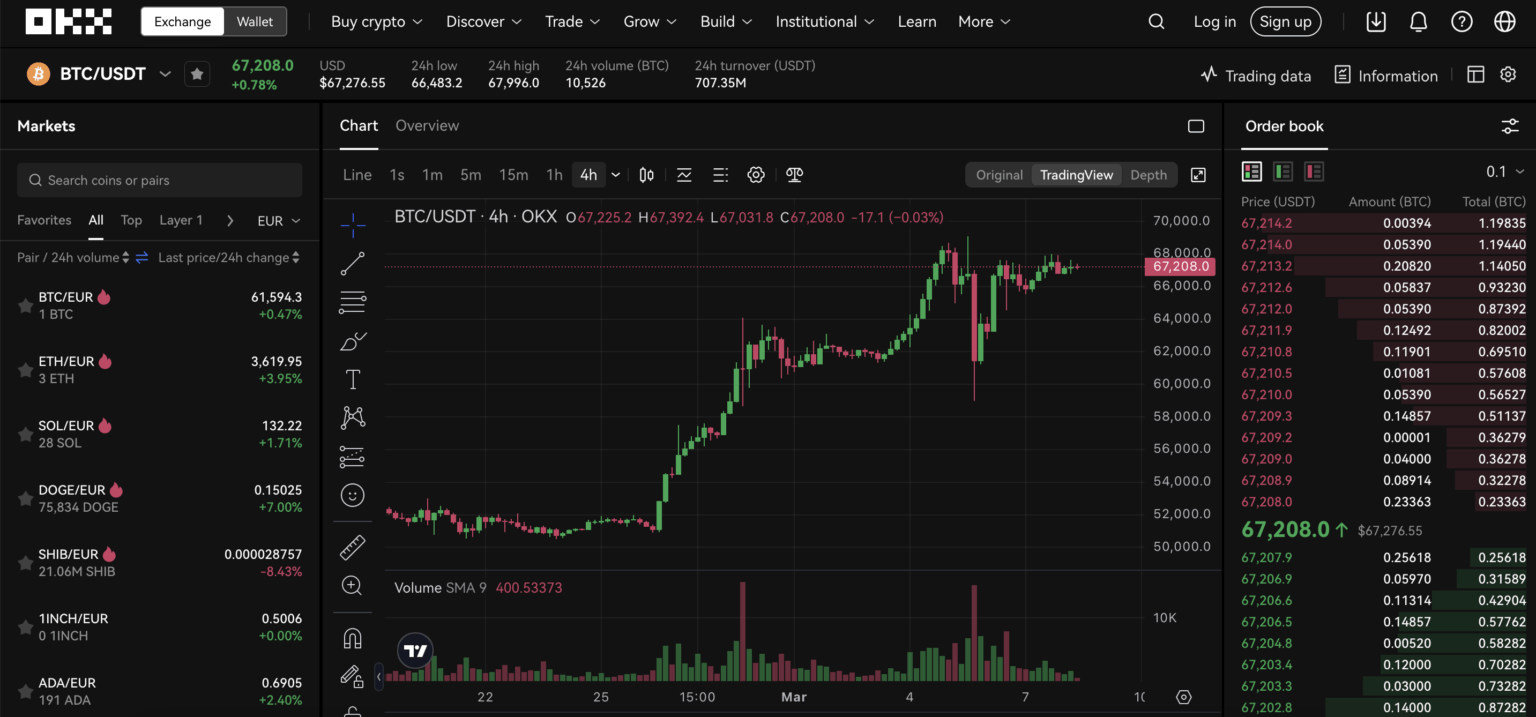
OKX account verification: the practical playbook
Okay, so check this out—there’s a short path and a longer path. Short path: you only want basic deposits and spot trading; the exchange might let you start with minimal verification. Medium path: to lift withdrawal limits and access margin, you’ll need identity verification (KYC). Long path: derivatives, higher limits, and fiat ramps typically require full verification and sometimes extra checks like proof of residence.
When I first walked through this, I rushed and uploaded poor photos. Rookie move. The ID verification system is picky about glare, cropped edges, and inconsistent lighting. If the photo looks like you took it under a streetlamp at midnight—yeah, it might fail. My advice: use natural light, plain background, steady hands, and the native camera (not a screenshot).
Also: document types matter. A driver’s license or passport is best. Some national IDs work, but the verification system varies by country. I’m not 100% sure which obscure IDs are accepted; if you have a local document, check OKX help first. Oh, and by the way… keep a separate secure folder for screenshots of your confirmation numbers—very very important for follow-ups.
Now about 2FA—don’t skip it. Seriously? If you want to protect funds, use an authenticator app (Google Authenticator, Authy, etc.) instead of SMS. SMS is better than nothing, but it’s vulnerable to SIM swap attacks. My instinct said “set up both” and that turned out to be a sound move. Also save backup codes somewhere offline. I once helped a friend who lost access and the backup codes were the only thing that saved the day.
Logging into OKX: step-by-step that actually works
Step 1: Prepare. Identity document, phone with authenticator, and a steady internet connection. Step 2: Navigate to the login page. If you’re on desktop, use a modern browser and clear cache if odd errors pop up. Step 3: Enter credentials and complete 2FA. If you get a block, try a different network—sometimes corporate VPNs trigger risk flags.
Step 4: Complete KYC. You’ll upload ID, take a selfie, and sometimes show a paper with a code. Make sure your selfie matches your ID; the facial recognition step can be finicky. Step 5: Wait. Verification can be instant or take hours, sometimes longer. On average it’s a few hours to a day, though during high volume it stretches out. Be patient. Really—resist the urge to resubmit multiple times; duplicates can slow things further.
I’ve seen cases where users hit a snag because their name on the bank account didn’t match the name on the ID exactly. That will trigger a manual review. So align names across your accounts if possible. If not, prepare supplementary documents: utility bills, bank statements, or a notarized letter—these help convince reviewers that you are who you say you are.
Pro tip: for US users, linking a bank via fast ACH flows or using a regulated fiat on-ramp often speeds up withdrawal limits after verification. But I’m cautious here—regulations shift and exchanges adjust policies. Keep records of any transactions you use for verification, and keep an eye on emails from OKX; they sometimes ask for extra info.
Common stumbling blocks—and how to fix them
Issue: Photo rejected repeatedly. Fix: change lighting, remove hats/glasses, use a different camera, and ensure the whole ID is visible. Issue: 2FA lost. Fix: use backup codes, or contact support with identity proof. Issue: Withdrawal blocked. Fix: double-check that you’ve completed the tier of KYC needed for that limit.
Something I’ve noticed: customer support response quality varies. On a tough verification, patience plus precise evidence wins. Provide screenshots, timestamps, and transaction IDs if applicable. Be polite—escalations tend to work better when you’re clear and concise rather than emotional. That said, do push if responses stall. I’m not advocating harassment—just persistence.
And hey—if ever in doubt, use the official link to log in: okx. That’s where you’ll start the process and find the help docs. I’m telling you this from hours of poking through help centers and multiple logins. Your mileage may vary, but that’s the canonical entry point I used when testing flows.
Security hygiene that traders actually follow (or should)
Use hardware wallets for custody if you’re serious. Keep exchange accounts minimal—only the funds you actively trade. I’m biased toward cold storage outside exchanges, but I get why traders keep margin balances online. For those balances, strong passwords, 2FA, and withdrawal whitelists reduce risk. Also consider separate email for your exchange accounts—one that’s not used elsewhere for signups.
On one hand, exchanges like OKX implement risk checks to protect users; on the other, these checks sometimes feel like hoops. You can reduce the hoops by aligning your account details and preparing documentation ahead of time. That little bit of prep saves hours later. Oh, and check IP addresses: frequent country hopping or VPNs can trigger re-verification. So avoid odd locations during login if you can.
FAQ
How long does OKX verification usually take?
It varies. Many users get verified within a few hours; some need up to 24–72 hours during busy periods. If verification requires manual review, expect a longer wait and be prepared to supply extra documents.
What documents are required for OKX account verification?
Typically a passport or driver’s license and a selfie for facial verification. Proof of address may be requested (utility bill, bank statement). Exact requirements depend on your country and the level of verification you need.
Can I trade on OKX before full verification?
Yes, but limits apply. Basic spot trading might be available with minimal verification, while withdrawals, fiat deposits, and derivatives often require higher verification tiers.
What if my 2FA device is lost?
Use backup codes if you stored them. If not, contact OKX support and prepare identity proof; the recovery can take a few days and may involve manual checks to protect your account.